7 year migration

Simon Kalinowski

A year ago I made a commitment to myself. Of the thousand or more commitments I’ve tried to make to myself over the last 5 years; its the one that I can see I’ve been most successful at sticking too.. and boy am I proud of that!

Over a year ago, I arrived into the office before 5am and proceeded to get into work with my usual enthusiasm associated with that hour (I love the early morning quiet as I’m slightly crazy). During a break from the work I was engrossed in I took a perusual of the usual online distractions and within the space of two minutes my life changed.

Three memories and the emotions will sit with me for life.

The first was an article on a recent research project outlining the effects of climate change and the focus of this research was that the modelling showed that the majority of the Byron Bay area would be lost due to rising sea levels. I felt utter devastation at the mere possibility within my son’s lifetime he would lose the ability to live in the area that provides so many incredible life experiences for me and us today.

The second was the obsession with fashion and social gossip associated with Coachella music festival. It struck me how significantly distorted our priorities were as a society. The overwhelmingly trivial nature of another’s life and what they were wearing took such great significance in the digital presentation of what was considered ‘newsworthy’ relative to so many critical issues facing us in this world today. It left me disallusioned with our priorities as a society and my place in it.

The third was another website and the picture of a business’s employee team enjoying a boozy day on a boat. The comments below were of the nature of what a great place it must be too work etc and yet when i considered the true meaning (or lack of) of that particular business; an equivalent of a used car dealer I realised that you would need alcohol and boats to give you some meaning to turn up as there would be little other than financial rewards in the rest. But rather than criticise, it got me questioning further my role as a leader and the greater contribution I could make in the lives of my staff and more importantly for them and their families. I could be doing more. and now, not at ‘some point’ in the future.

It left me feeling a sense of helplessness and then also rage. Our priorities in this world were all wrong and I was a part of the problem. Was I doing enough to change those priorities? Was I going to employ the hope strategy of waiting for others to do something about it or was there something more I could do?

So it lead to me to this question. Or more importantly, this series of questions…

  1. When my son is 25 and he asks me ‘Dad, what are you doing to leave the world in a better place?’ What is my answer going to be?
  2. We have meaningful purpose in what we do at work; in fact; we are helping solve one of the biggest issues on the planet but how are my team living in their lives with their families and friends? How do I provide more meaning for them?
  3. Did I have the courage to do something about it? If so, what?

It didn’t take me long to find my answer.

So my commitment to myself; To transition my life to a truely sustainable one for my self, for my family and for my staff. Then, as that evolves; to build a model that allows me to challenge and transition other businesses and communities to that model.

So breaking it down

Sustainability for self.

Sustainability for my family

Sustainability for my businesses, my customer and my staff.

Creating a model that then can be adopted by other businesses and communities.

No small task. In fact, it’s massive. And I’m just a little passionate about. The perspective of considering on the relationship with my son and his perspective on the world provides a drive and commitment like nothing else. I want him to live in a world where he can see and experience positive change and grow up with an belief that he can also lead change. It’s totally transformative for me that thought of my energy, my thoughts and actions and the effect on him.
So this brings into fruition. The 7 year migration.

The migration from being an consumer to having a surplus for others. From excessively consuming economically, environmentally, socially and politically (the 4 basic facets of sustainability) and be producing excess, or in fact be giving to others greater than I have need myself. To reduce and perhaps eliminate my negative footprint on the earth and be contributing back in a tangible and complete sense.

7 years to achieve all of that. Easy.

And so it’s started. The first thing I knew was I had to break my addiction and reliance on the city. It’s such a bullshit contstruct to believe I need to live with that residual stress and anxious, expensive and high pressured living that is the city 24×7. I’m not happy, never have been and always have known that my best self lay elsewhere. So I’ve moved.

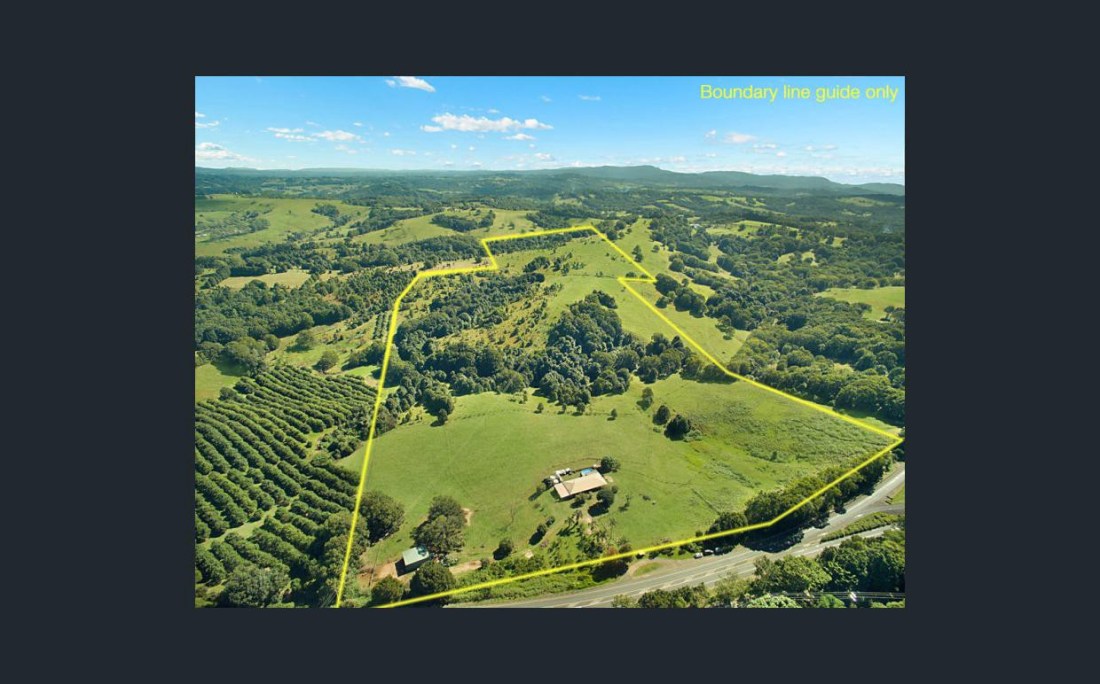
I’ve bought a farm in Bangalow and that project starts in earnest to bring sustainability to self, the family and my various teams.
So this little post is a marker; the first of many that I will write and share of this journey. I’m 1 of 7 in and tracking well. I’ve been supported by some incredible people and all of my body, intuition and instincts know I’m on the right path and a path that will provide meaning and purpose for a very long time.

Be the change.

Ultimately, it’s everything and all you can do. I’m giving it 7 years to see exactly what that means for me.

Vulnerability

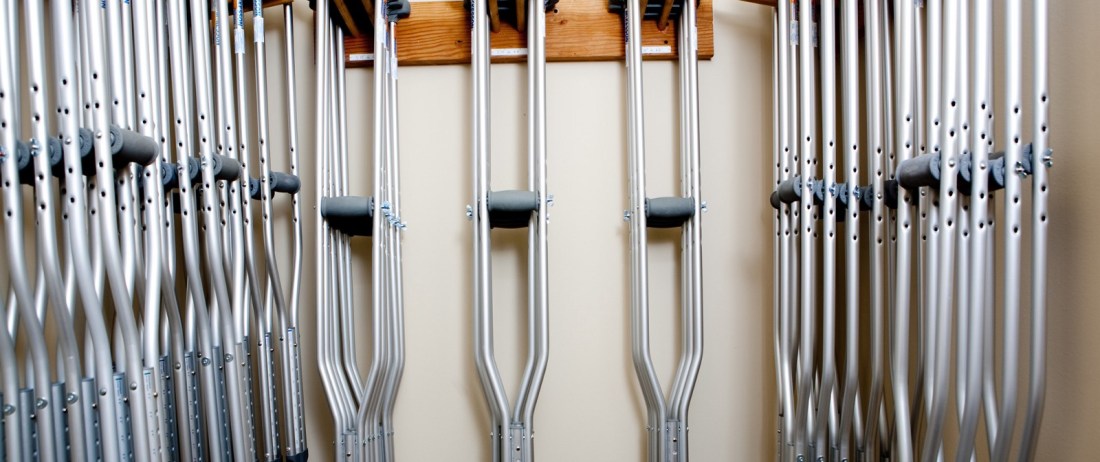
If I ever move to a new city, I’m packing a pair of crutches.

When I injured my knee in a misadventure in New Zealand a while back, I discovered that hobbling around is one of the best ways to meet people. Most of us don’t really think to reach out and help someone; we’re usually lost in our own thoughts and problems. Will certainly me. We certainly wouldn’t think to reach out and help someone who’s 6’4″ and looks like they’ve got it together.

On crutches, though, the equation is completely flipped. I found that everyone wanted to talk to me. Strangers came up and asked how I’m going, and how I injured myself, which is fascinating in itself. I also found that at work — the few times that I was actually able to hobble into the office, in the first couple of weeks — I suddenly had a very different relationship with my staff.

For example, when I normally meet with my engineering team, I’m somewhat of an imposing and intense figure. When I was injured, though, they were hurrying around to get me a chair, a cushion, to make sure that was comfortable. I found the act of someone getting me a chair a quite strange and humbling experience. I kept thinking: “That’s usually my role!”

As a natural consequence, I became more respectful of the people around me. When I’m at full health, I feel like I can do it all myself, so I can be quite dismissive of others help. But when being quite conscious of people being attentive to me, I felt much more appreciative of the humanness of others. That’s the attitude I’d like to have in a foreign city. On crutches, obviously physically disabled, it’s an easy invite for people to offer to do something for you, or to take care of you.

Even travelling the 150 metres or so between the office and a favourite café became a mission. Getting there wasn’t so bad, because it’s mostly downhill, but on the way back, I have to grit my teeth while thinking, “I feel so incompetent!”

An interaction at that café sticks out in my mind. There’s a Canadian waitress who’s served me at least a hundred times, yet we had never learned each others’ names. As soon as I hobbled in there, though, she asked what caused my injury, and what I was doing to treat it. That led us into a whole conversation on the reason why she’s here in Australia: she’s doing rehab masseuse work for an amateur AFL club.

As I was leaving, she gave me some specific advice on how I should treat my knee, and how I should let the Arnica tablets dissolve under my tongue rather than swallowing them. I could tell that she really cared that I was injured. It was quite humbling, because normally when I walk in there, I’m quite self-absorbed. Not in a rude way, but because I’m thinking through problems, or working on my laptop. Now we know each others’ names, and there’s a whole level of human connection created simply because she was caring for my wellbeing, even though she had no cause or reason to. Just the fact that she could see I was in pain was enough for her.


I pride myself on being relatively indestructible. I like to think I’m fairly resilient. I can work through most barriers: pain, sleep, stress, whatever’s thrown my way. So to be in a situation where I feel like I’m the most vulnerable of the group is really uncomfortable.

The injury affected every aspect of my life, not least how I do my job. It forced me to be more patient — certainly a good thing. Even being out of the office allowed me to respond to situations much more calmly. Because I felt incapacitated, I didn’t have the same level of ‘go’ that I normally did, so I could just work through problems that might’ve affected me differently, were I not injured. There was a lot more questioning and considered thought on my part.

I wouldn’t say that I’d want to be in this state all the time, but I definitely found silver linings in that cloud.

My Mental Health

I have some real challenges with my mental health from time to time. As I get older and understand it more, unfortunately, I can say that most of those challenges seem to be self-created.

All of my growth, particularly surrounding my business career and leadership, is a reflection of my personal battles with my mental health. When I look back at my periods of stress, strain, success and growth, there’s always a direct correlation to my internal situation at the time. I think that’s true for most people, but they don’t necessarily speak about it as candidly as I do.

The depths of the lows for me were in my teens and my late 20s. I got to a place whereby suicide was a real alternative. I didn’t really have a language for it at the time; I just really struggled with life, school, relationships. I felt a lot of pain toward the state of the world and my position within it. I didn’t know how to go about attempting to succeed in the world, or make a difference. For me, to opt of it all was actually a tangible outcome.

At that point, if I could have identified something or someone that would have benefited from my death, then I probably would’ve committed suicide. Fortunately I couldn’t identify anyone, so I decided that, since there was no meaningful reason for me to leave this world, I might as well stick around.

It’s a blunt outlook, but it was my truth. It’s a bit different to the usual story you might hear about depression, about how some people bounce back from the depths of despair into glowing success. For me, honestly, a lot of the time I just feel like I survived; like I outlasted the pain. Nothing particularly grand happened; I just persevered and made it through, and gained some inner strength out of that.


My current story regarding my mental health is that I’ve come out of a period of intense stress over the last couple of years.

I lost my father, who was very close to me.

I had an intense period of work, wherein I made commitments that cost a lot of time and money; we’re talking a few million dollars’ worth. The hardest part about those commitments is that all of them involve people and relationships: people who believe in you, or want to believe in you. The unspoken truth of business leadership is that a lot of leaders carry those commitments very seriously, and at times it comes with real weight.

Throughout that 18 month journey, there were numerous points at which complications could’ve meant the end of the business. But we persevered and made it through, too.

My mental health has been challenged throughout that time, and even now, because it feels like I’ve had a lot of bad days over a reasonably long period of time. As I frame up my plans for the future, it feels like I need to get out the proverbial sword and hack away at a lot of the old experiences and emotions that have accumulated around me. It’s a matter of tidying them up so that I’m mentally and emotionally free to engage in the future.


The truth of my own mental health is that so much of my experience is dictated by three things, in order of priority: self talk, diet/exercise, and alcohol consumption.

The biggest and most influential element is the contents of the story or stories I’m telling myself. What are the words and feelings I feel about myself, and what is the evidence I’m focussing on every day in terms of those feelings? When you are going through periods of great challenge, it’s really hard to find the evidence for success in your life. It’s something that will always require vigilance.

If I’m not eating right, I become more susceptible to the stressors around me, and they can start to influence my emotional state. Similarly, if I drink alcohol a few days in a row, I know I’ve got a real challenge on my hands. The way that I need to overcome both is to push myself through really serious, intensive exercise, which purges the body and returns me to a positive state; or at least gives me the breathing space to reset.

I find that the biggest unspoken downside of mental health issues is an ongoing and persistent lack of self-confidence. Because I’ve been struggling for a while, now, I find that my base ability to take on problems and persevere through even simple day-to-day tasks can be really low. It’s been worn down progressively and repeatedly – to the point where it’s hard to start the day in a strong place.

The goal from here is to build that back up again, so that in six months’ time, if you asked me about my mental health, I could truthfully say that my default position is to operate from a strong foundation of self-esteem and inner confidence.

I commit to returning to that place where I trust in myself and what I’m doing. I commit to inhabiting the mental space to tackle with openness and confidence the uncertainty that exists in daily life, as well as saving for myself a healthy dose of grace for the mistakes that I’ll inevitably make.

a 1000 moments of personal joy – switching the filter through which I feel life

Simon Kalinowski

Spent the week in a course last week and it started with a profound exercise — writing my life story up until I was 20 — and focusing on all the memories and emotions I could recall. Spent the 3 odd hours and pulled together around 15 handwritten pages — and between it all — couldn’t recall more than 1 or 2 moments that I was genuinely proud of; that I was excited about and had strong positive resonance with. In truth I had a very secure and happy childhood — but my interpretations and the behaviours I’d set up through that period (and since) meant that everything I viewed and felt — came with a tinge of sadness, the burden of frustration, the pain of disappointment or the lack of fulfilment.

Later on, when time presented — I asked myself a different question — what were the moments that I was truly proud of — where I had showed up — and with some effort only got to 3! Whilst not reflective of the truth — it was reflective of ‘my truth’; the emotional wash that I painted as the background to my life’s canvas — the feeling of being not good enough — and the feeling of always needing to be or do more in order to feel content in self.

This realisation stirred emotions deep — was it the life that I wanted to live — I’ve such ambition, such drive, such passion to share with others — and to live my life by….. Was this story going to be the backdrop by which I wanted to live and experience every day?

Like being struck with lightning another truth struck me — I’ve recorded daily statistics on my life for most of the last 5 years as a means of understanding my own performance — and one of the 34 different criteria I tracked was an ‘evidence book’ of successes — the idea of journaling daily the evidence of my successes. Things that I could be proud of — recognition of my own success. The stark truth was that in those 5 years — I’d dismissed it — unable to give myself permission to give myself a ‘tick’ of approval. Not for anything. Ever.

It was very easy for me list my failures but so impossibly hard to recognise myself positively for anything.

So with some great relief — with great freedom — I thought — what if I could give myself permission to record anything that I thought was successful. Give myself a ‘tick’ every day — or many times a day. The shift that would provide to my emotional filter that I looked through at my life — what if I could make every single day a win? Would that be possible?

So, today; I’ve decided I’m going to set myself the task of recording a 1000 moments of joy; a 1000 moments I can be proud of — look back on fondly — with no negative context. Imagine the freedom that would provide my soul. Imagine the permission I could give myself; to give more, to share more; step out into the river of uncertainty and experience life more fully. So I’m off on my adventure, my adventure for one with the most rewarding of destinations….

Motivation

One Monday morning recently, I woke up with an extreme lack of motivation. I didn’t want to go to work.

It’s a feeling that everyone has from time to time, but it’s a bit different when you’re the boss, and it’s your business. It’s not a common problem for me — I only feel this way once every three or four months — but it’s significant enough that I’ve developed a system of coping mechanisms to deal with this situation.

It didn’t help matters that I’d had an absolutely sensational weekend, in the sun, at the beach. It’s an easy choice in comparison, where you think to yourself: jeez, that life’s good. The weather’s still good today. Why would I want to go to work?

Digging a little deeper, though — beyond memories of sunshine, surf, and time spent with those closest to me — I realised that I felt overwhelmed by the volume and complexity of tasks before me. I’d be putting this moment off for several weeks, but it was time to work with pen and paper to design a plan of attack.

First, a necessity: a change of scenery. Usually I’d go for a run at this point, to get the blood flowing and my mind churning, but since I was still on crutches at this point, exercise was off the cards. So I ventured to a coffee shop and started writing out a list of what was bothering me. The result was fourteen complex tasks on the page, each relating to various business decisions and strategic concerns.

I’m generally a very driven person, so my next step was to acknowledge the problem — my lack of motivation — and reconnect to that internal drive. That for me is largely about continually asking yourself the why — and getting to the deeper emotional spine of what’s behind your drive — and lets be honest; it’s really easy to lose that in the ‘busyness’ of life.

After that came the decision to regain control of my physical environment: tidying and reordering my home. The theory behind that was to start with small wins. I had to ground myself in a simple task so that I could feel a sense of achievement, and carry that into my workday.

The next necessity was to share my frustration with a couple of people close to me, in order to defuse the emotion that I’m the only person with problems, I’m never going to get out of it, and at its worst point, a lack of motivation feels suffocating. Yet the reality is that every single one of us has a suffocating moment every now and then.

By sharing it around with a couple of key people, I started to reconnect with the rest of the world, and stopped feeling as though it’s all about me. These conversations gave me context: rather than wallowing in self-pity and a deflated sense of self-worth, I started to think to myself: I’ll still be around tomorrow. I’ll get through it. I always have. There’s a past, and there’s a future. I regained perspective on my situation.

From there, I picked the easiest of the fourteen complex problems, and started thinking about the necessary steps to follow that through to completion. By mid-afternoon I’d delegated three more tasks to others. I’d gone from fourteen tasks to ten; roughly a quarter of my workload was in progress. I’d overcome the inertia and replaced it with momentum, my normal state.

At the start of that morning, my psychology was negative. I was overwhelmed; it was all too much, too hard. It would have been very easy for me to stay in that switched-off state — as being the boss you don’t as easily have people to hold you to account.

By the end of the workday, though, my psychology had flipped completely. I’d reordered my physical space. I’d had some wins. I’d talked to some of my favourite people, and I’d set a workflow in motion.

In a matter of hours, my motivation had returned. I was back to being a good leader — a role which includes delegating tasks, and managing other people to get the job done. Weird as it might sound, I was then happy that I had these problems, rather than down and desolate like I was earlier.

Like I wrote earlier, I only feel this way a handful of times per year. It’s not a common problem, but it’s an ongoing self-management exercise. As I see it, the right way to approach my feelings that morning is to shift my perspective, and put into action a system that supports my success. In reality it’s no harder than suffering and accepting your situation and complaing about it — it’s all a matter of perspective and choice.

The Hard Road

Learning to choose the smartest option, not the toughest one.

The first time you get on a bicycle, you soon fall off. The second time? Probably a similar story. But at some point, the action becomes natural. Your mindset shifts. You think to yourself, “that’s right — I was always riding bikes!” Mastery of that skill takes time and effort, but the rewards are great.

Discomfort is a necessary by-product of change. To become comfortable in a new role, you’ll have to step outside of your comfort zone. This is true for anything that’s worth striving for. You’ve got to find the resolve to battle through it, until you’re comfortable enough with your abilities to wonder how you ever struggled in the first place.

There’s real value in pushing yourself into a space where you feel that discomfort. I’m a big believer in extending myself, to see how far I can go; to discover what I’m capable of, and what I’ve got in me.

There’s a difference, though, between taking the hard road and the smart road. In the past, I’ve generally favoured the former. Over a decade ago, aged 23, I knew that, if I wanted to achieve my goals and ambitions, I had to move on from my previous strategy of investing in real estate, and spend time learning about scaleable businesses.

I willed myself into that situation. I kept pushing and pushing. I didn’t know much, but after looking at a few options in a range of industries, I told myself that Mandalay — then named Weighmaster — was my entry point. Yet I never envisaged that it would be as challenging as it ultimately has proved to be. For the first two or three years with this company, I felt completely out of my depth. I felt complete inadequacy. Plenty of people — likely more sane than me — would’ve pulled back, given up, or rationally exited due to the obvious failure and challenges that needed to be overcome in order to make a success of the venture.

That period challenged every aspect of my psyche: my relationship with money, with others, and with my own identity. I put on lots of weight. I nearly went bankrupt (more than once). It was a weathering and transformative process, but eventually, I started to understand the environment. The learning period was a lot longer than I’d desired and I’d never wish that journey upon anyone.

That mindset can lead to problems if it becomes ingrained, however. For much of my career so far, my natural response to a challenging situation has been to start jogging down that hard road. To will myself into it and know that I will reach the other side.

My level of comfort and resilience in tough situations — particularly in business — is pretty high, because I’ve been a bit of a masochist. Over time, I’ve built up a reference chest that shows I can survive tough situations. I’ve proven to myself that I can work hard. As a result, I feel a level of self-assuredness that others might not.

But I’m still learning to shift my mentality toward jogging down the smarter road. It’s a major behavioural change. I constantly need to stop and remind myself of the need to be a wiser judge of my time and energy than Simon, aged 23. Although the hard road still beckons, it doesn’t necessarily mean it’s always the best option.

No More Mr. Fix-It

When having all the answers no longer helps.

I have a habit that’s both a tremendous strength and a terrible weakness: I solve problems.

On one hand, good problem solvers are hard to find. This ability has served me well in my career so far. It’s part of the reason that Mandalay has grown over the years.

Conversely, I often find myself in the middle of crises, calling the shots, directing staff toward the dam in a mad rush to plug the holes. I’m a good leader when it comes to providing short-term direction, but not when it comes to ongoing management and structure.


It’s hard for my business to create additional value if I’m the bottleneck through which all issues and concerns are filtered. It’s simply not sustainable for a company of 30-plus to report to me directly, particularly when I’m at my best only in a crisis. I’ve known this for a long time, but I’ve found it hard to break out of that mentality. It took a two-day meeting with my two senior managers earlier this year for me to come to the conclusion that Mandalay must reposition itself if we’re to grow.

I’ve been avoiding this decision for a few reasons. I’m nervous about communicating this change to my staff, as the self-critic in my head can immediately see at least three ways for things to go wrong.

One: the ever-present fear of failure. I think to myself, “ (expletive)!! what happens if it doesn’t work out? Then I’ll have to acknowledge more failure, and take on further work…” and on and on.

Two: I’m worried about the effect that it’ll have on other people. Either they don’t respond well to change, or they’ll feel like they’re not being rightly appreciated. I’m quite conscious of other peoples’ feelings when it comes to change.

Three: there’s a high level of ‘the unknown’ around this decision. This is one of those cases where, if the weakest link in the chain doesn’t get out of the way, he’s holding the company back. I don’t want to do that any longer.

The main challenge for me, from a leadership perspective, is to be able to provide a vision for my staff, and to be able to inspire them on that vision, even though I don’t know all the answers. I find that really hard, because it’s easy for me to know all the answers in other situations and yet here in my own life — I feel I come up short. Here, I know that we’re taking steps, and I know where we’re roughly heading but the detail is yet to reveal itself.

Still, I have to plunge into this with an at times unwilling enthusiasm.


I also struggle to have trust in others to the point where I can say, “here you go, I’ve put so-and-so in charge of this now, and they’re going to come up with the answer to that”. It’s hard for me to not feel like a failure because I can’t do it myself. Even though I know that this is actually sign of good leadership — the ability to delegate, and let go — it still feels like a bit of a failure to me at this point.

A short attention span is a classic entrepreneurial trait. I can be guilty of that, too. I have a great propensity to go, “great, right, this is now someone else’s problem!” and run off to the next thing that I’m working on. If I don’t maintain the right rhythm and check-ins with the staff in charge, though, then we might run into trouble. I believe this is the element that’s most likely to fail, and that’s what I intend to pay closest attention to.

I still measure my own effectiveness by how much I get done, and not necessarily about how much I create through others. In six months, I’d love to be able to comfortably sit in a quiet space one day per week and look through a whole series of reports from my empowered managers. I’d love to be able to coach and manage them around that data, while I keep my mind on the company’s overall vision and direction.

I’d much prefer to operate that way, rather than feeling like I currently do: that inescapable mentality which says, “I have to make 25 phone calls today. I have to solve 15 issues. I have to be the solution to all of the problems.” That needs to be not where I find my self worth.


I’ve got a lot of work to do if I’m to get to that place. As I mentioned earlier, it’s very easy for me to solve problems. I respond well to a crisis, but I want to step out of that space, and swim for the furthest shore. I have to trust in my swimming ability — and not because I’ve done it before.

It’s time for a change. No more Mr. Fix-It.